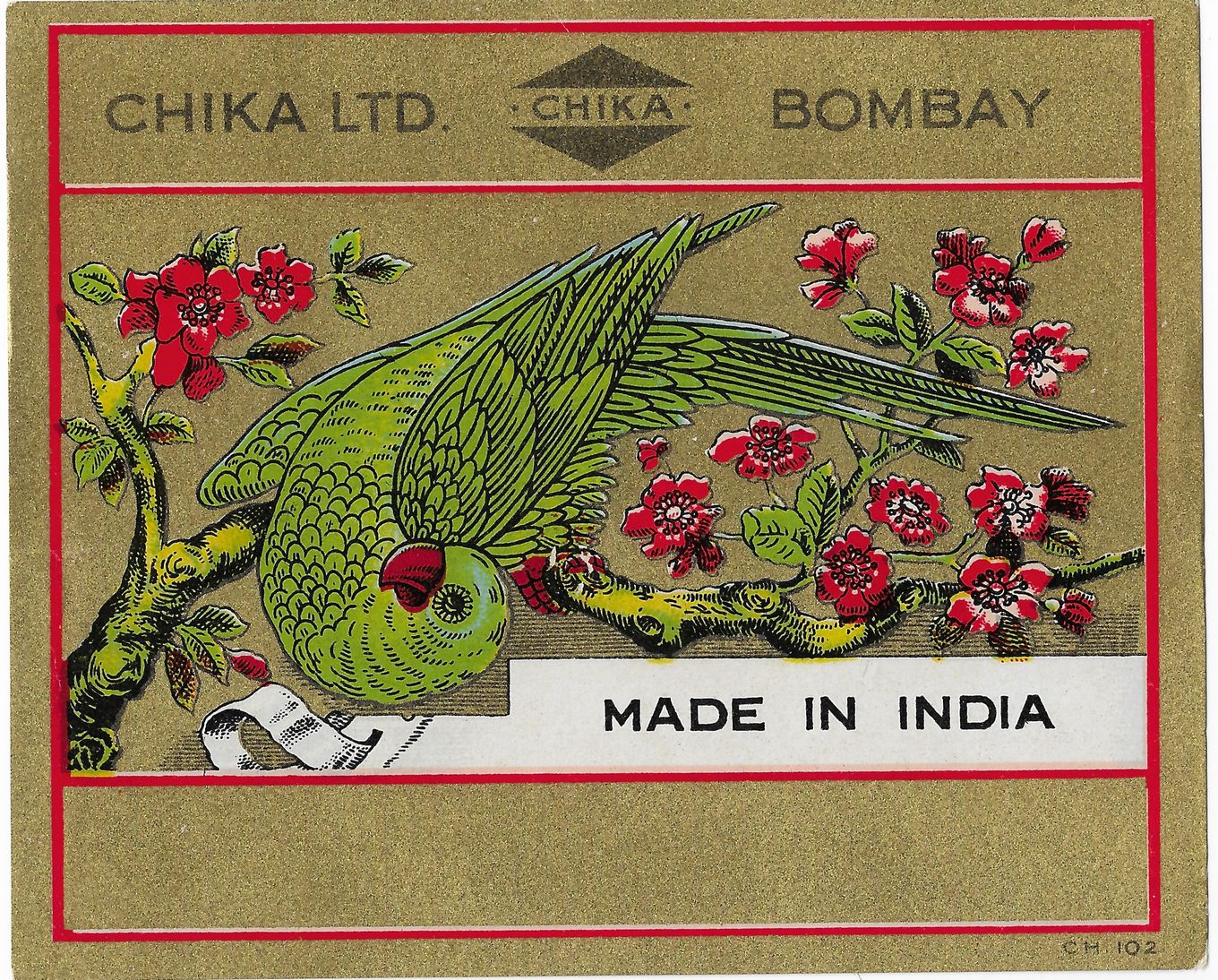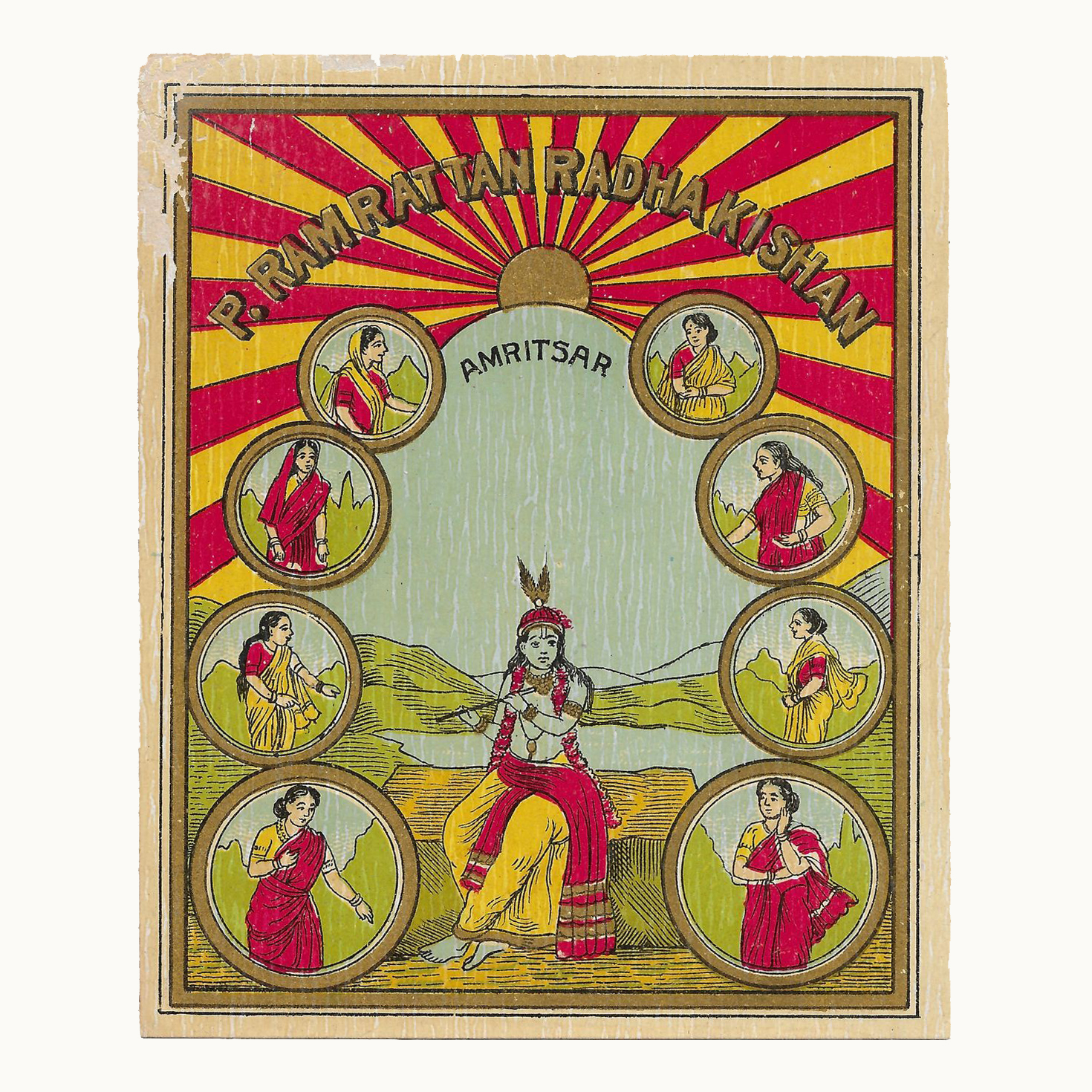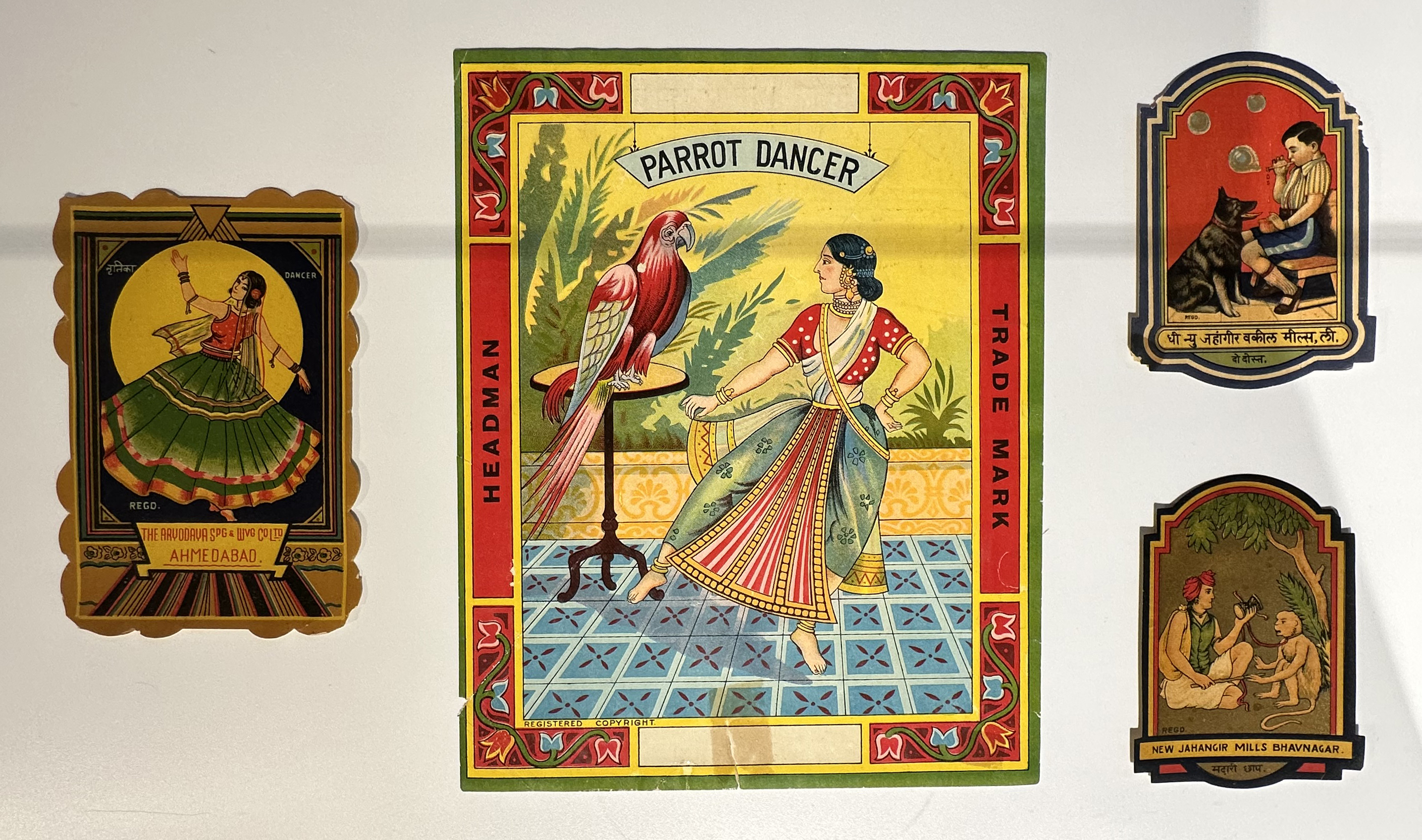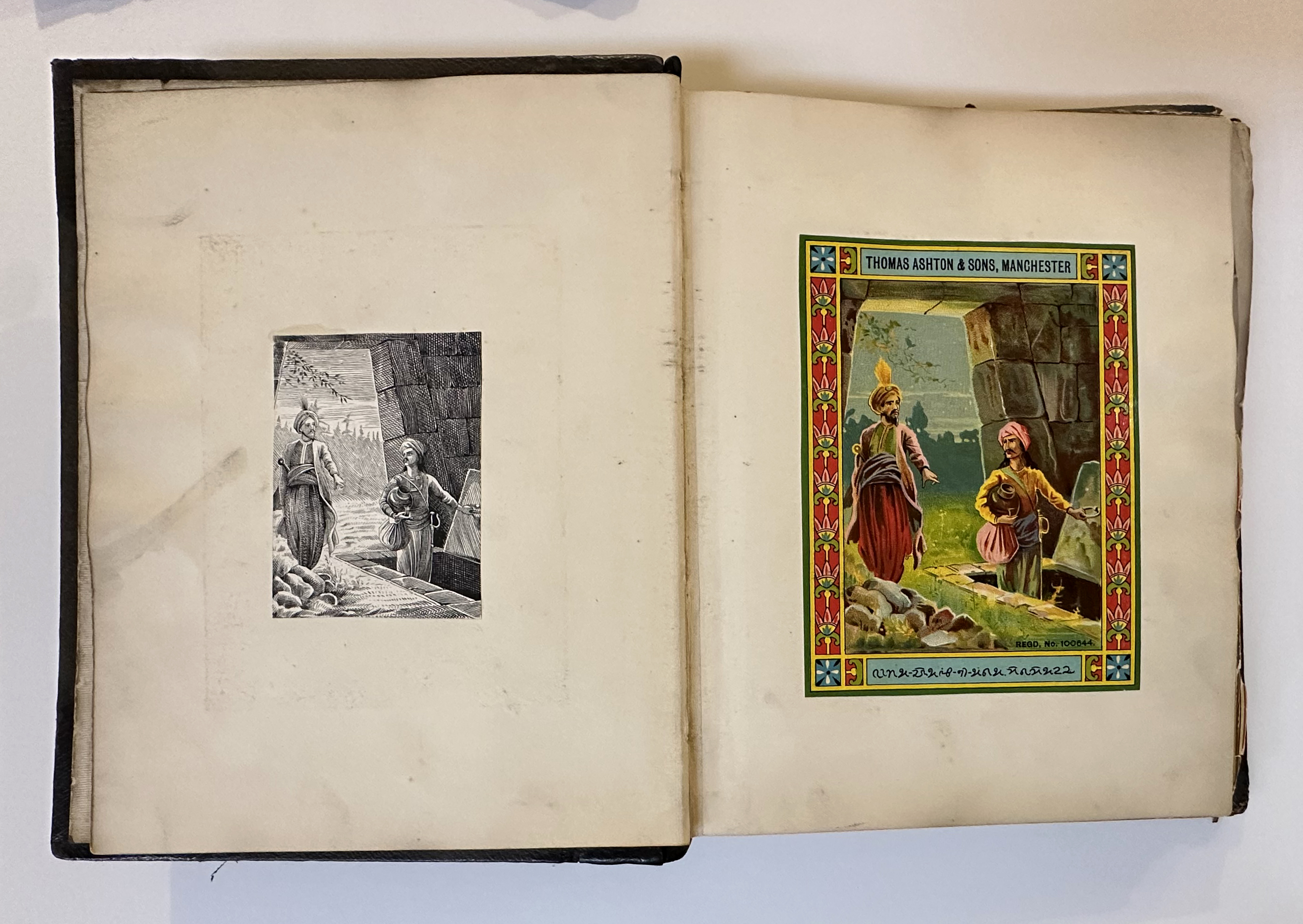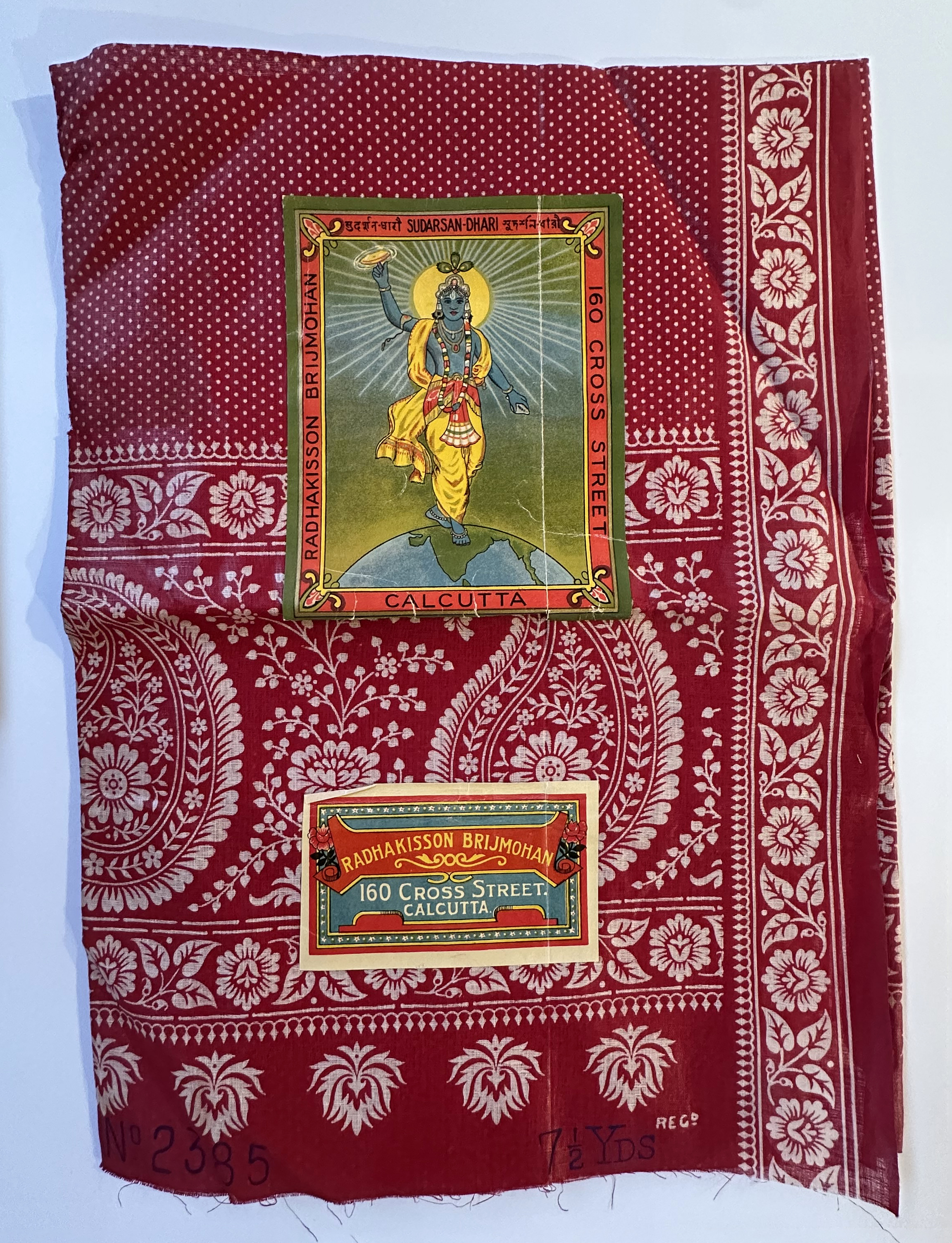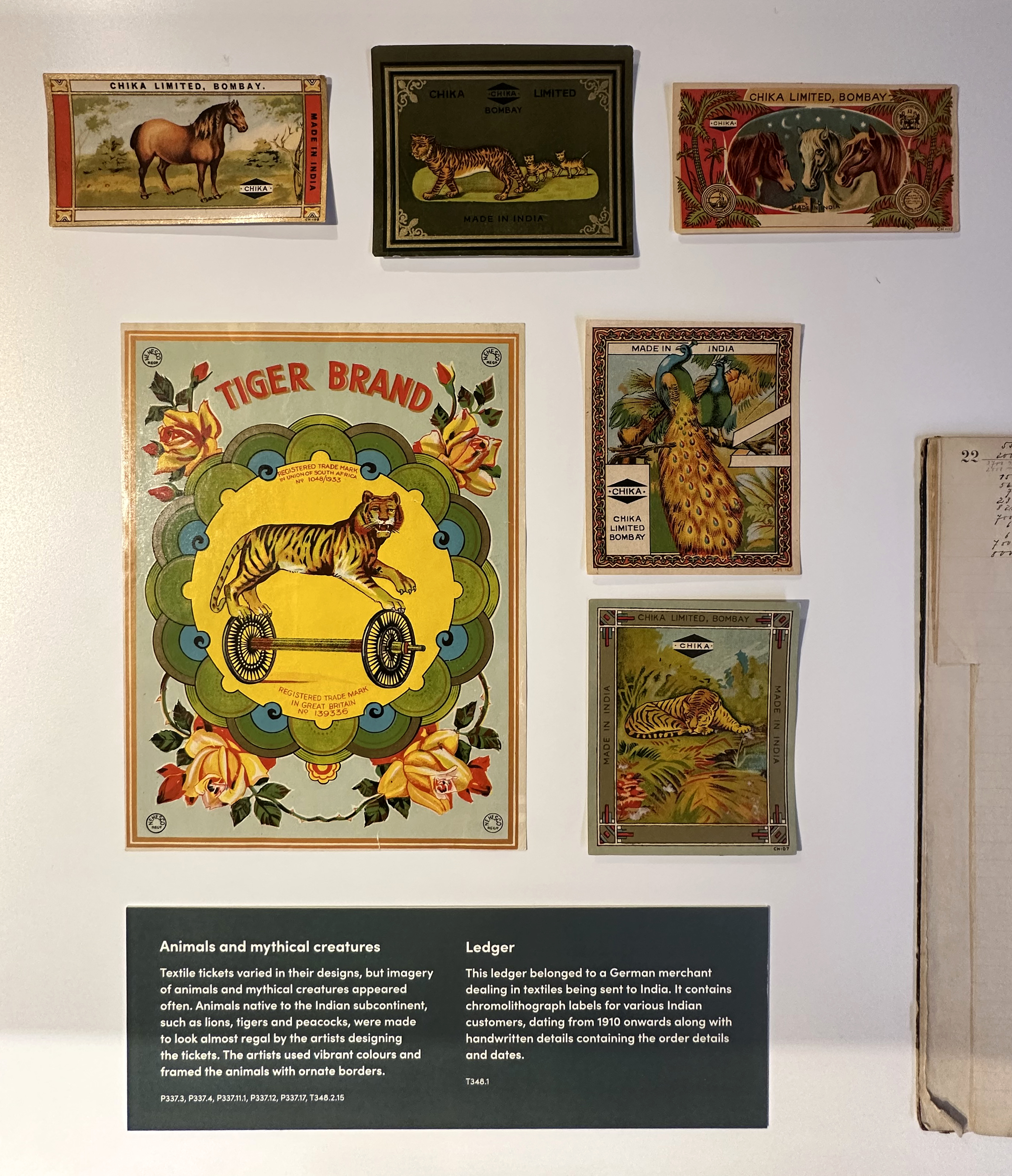

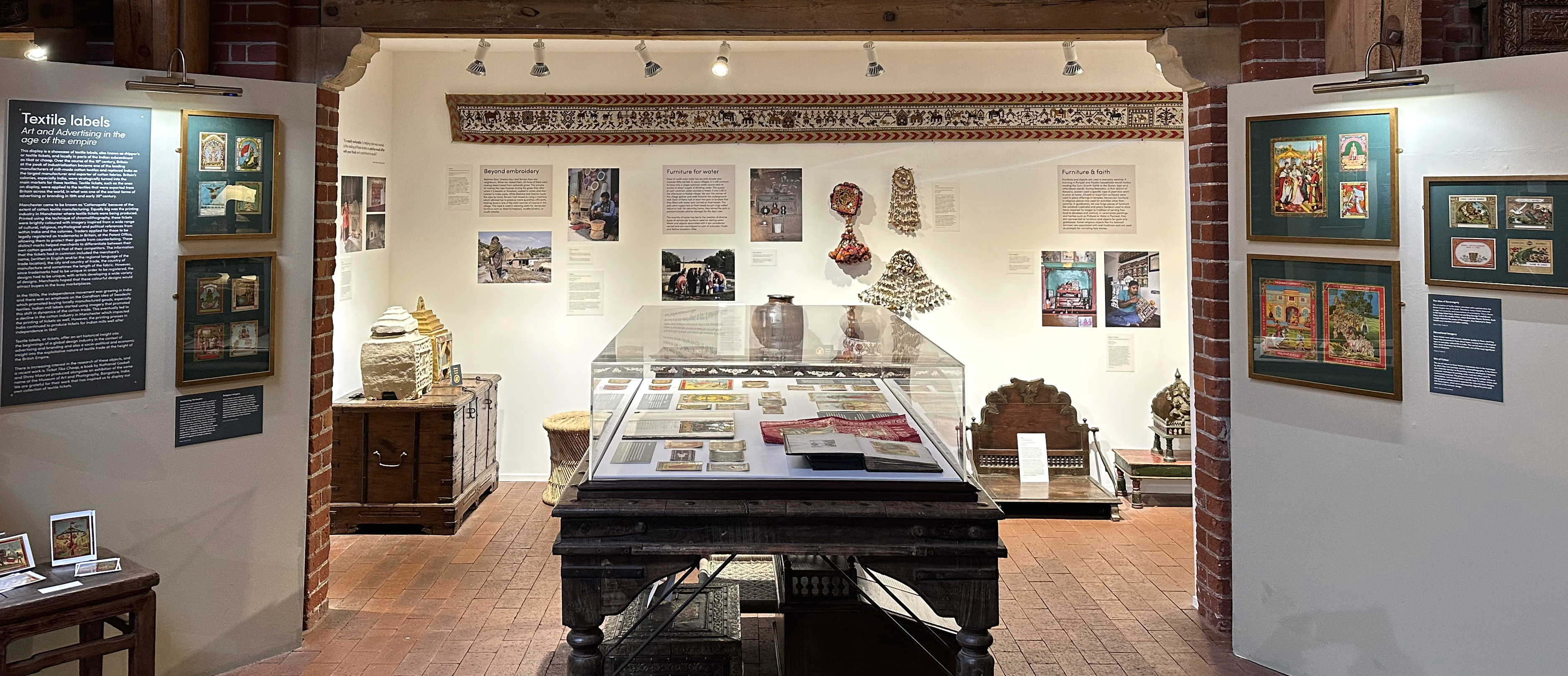
This display is a showcase of textile labels, also known as shipper’s or textile tickets, and locally in parts of the Indian subcontinent as tikat or chaap. Over the course of the 19th century, Britain at the peak of industrialisation became one of the leading manufacturers of mill-made cotton textiles and replaced India as the largest manufacturer and exporter of cotton fabrics. Britain’s colonies, especially India, were strategically turned into the main markets for these textiles. Textile tickets, such as the ones on display, were applied to the textiles that were exported from Britain across the world, in what was one of the earliest forms of advertising or branding in 19th and early 20th century.
Manchester came to be known as ‘Cottonopolis’ because of the extent of cotton textile manufacturing. Equally big was the printing industry in Manchester where textile tickets were being produced. Printed using the technique of chromolithography, these tickets were brightly coloured with imagery inspired from a wide range of cultural, religious, mythological and political references from within India and the colonies. Traders applied for these to be legally registered as trademarks in Britain, at the Patent Office, allowing them to protect their goods from counterfeiting. These distinct marks helped merchants to differentiate between their own cotton goods and that of their competitors. The information that the tickets had in common included the merchant’s name, (written in English and/or the regional language of the trade location), the city and country of trade, the country of manufacture and sometimes the length of the fabric. However, since trademarks had to be unique in order to be registered, the designs had to be unique, with artists developing a wide variety of designs. Merchants hoped that these colourful designs would attract buyers in the busy marketplaces.
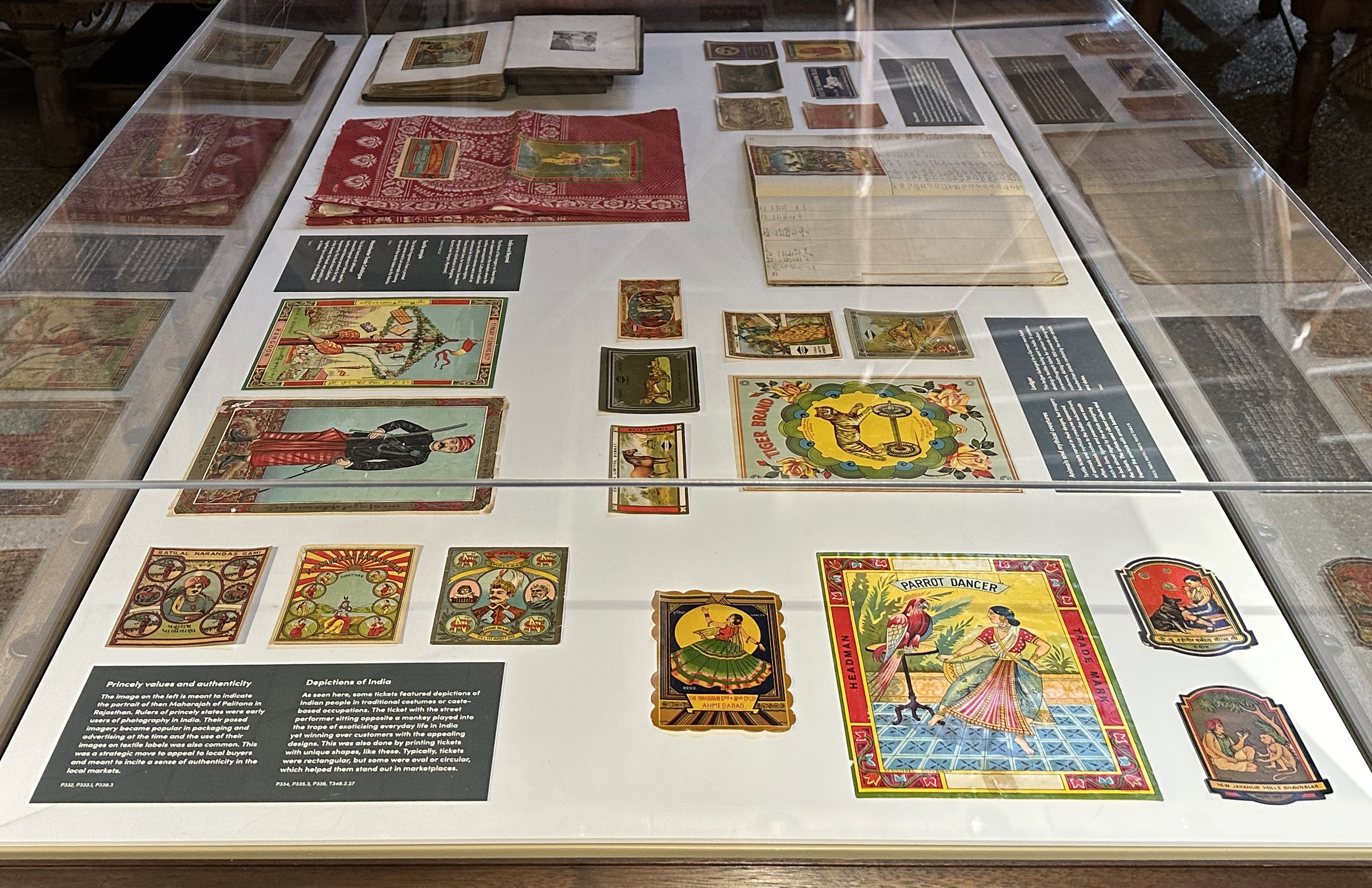
In the 1920s, the independence movement was growing in India and there was an emphasis on the Gandhian idea of Swadeshi which promoted buying locally manufactured goods, especially textiles. Indian mill labels started using imagery that promoted this shift in dynamics of the cotton trade. This eventually led to a decline in the cotton industry in Manchester which impacted the printing of tickets as well. However, the printing presses in India continued to produce tickets for Indian mills well after independence in 1947.
Textile labels, or tickets, offer an art historical insight into the beginnings of a global design industry in the context of advertising and branding and also a socio-political and economic insight into the exploitative nature of textile trade at the height of the British Empire.
There is increasing interest in the research of these objects, and a recent work is Ticket Tika Chaap, a book by Nathaniel Gaskell and Shrey Maurya produced alongside an exhibition of the same name at the Museum of Art and Photography, Bangalore, India. We are grateful for their work that has inspired us to display our own collection of textile tickets.