Mata ni Pachedi – Narratives of art and social justice
Mata ni Pachedi translates to Cloth of the Mother Goddess. Practised by people from the Vaghri community, these are sacred textiles used in the worship of the diverse forms of the goddess. The Vaghri community are a marginalised group consisting of several sub-groups, mainly from Gujarat, India. Historically, they were denied entry into Hindu shrines for worship, a practice stemming from discrimination based on caste. Rather than accept this exclusion, the community responded through art. This art was Mata ni Pachedi.
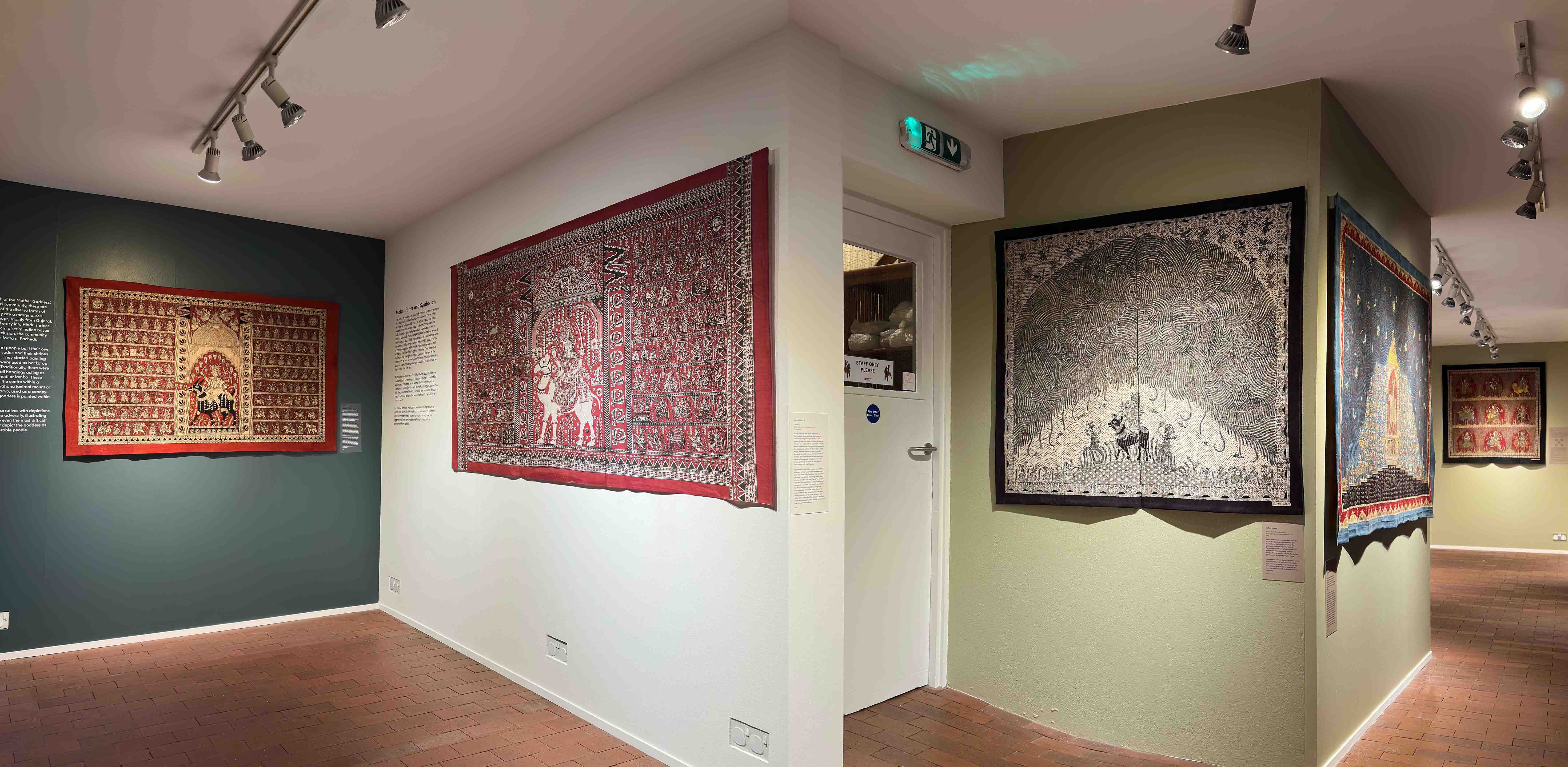
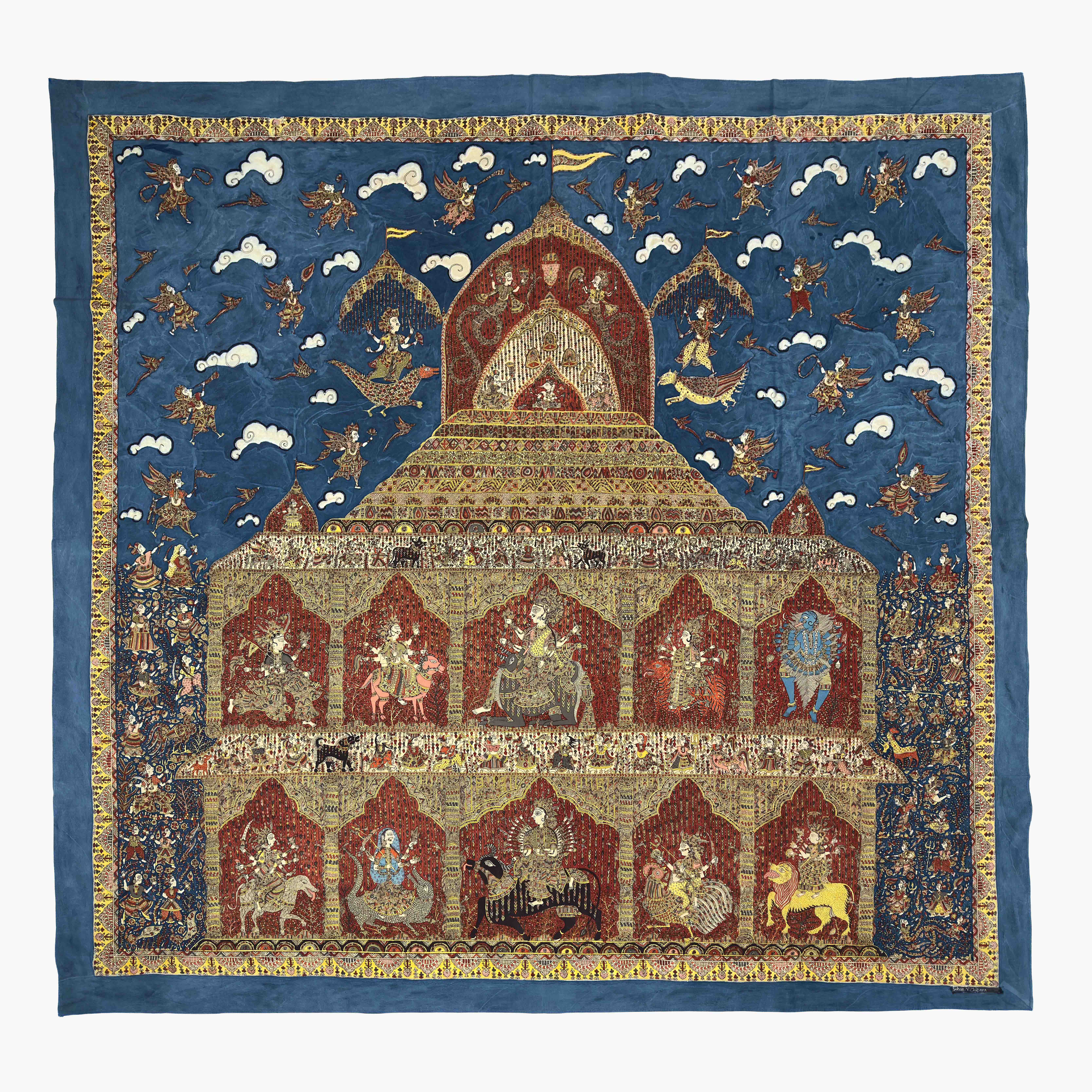
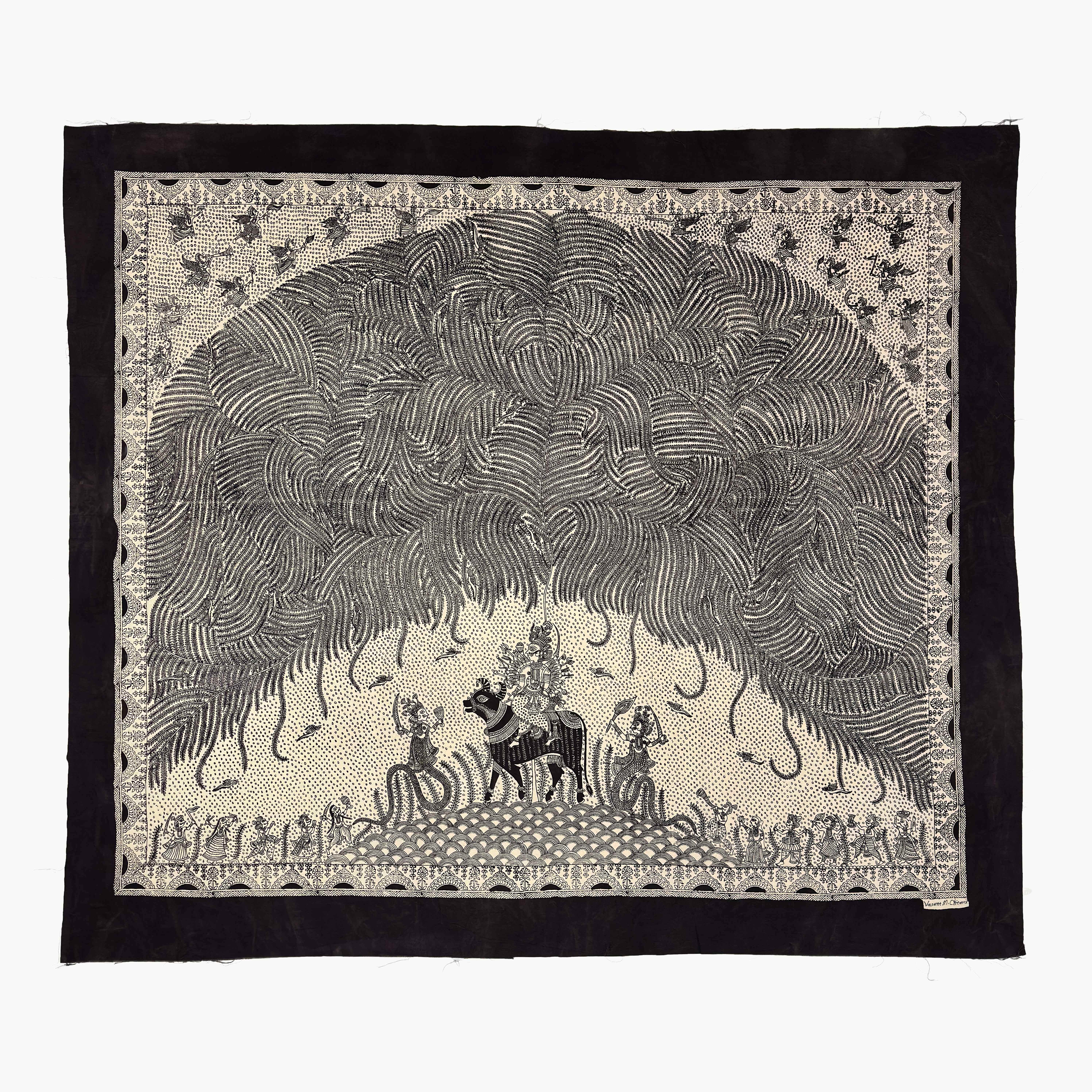
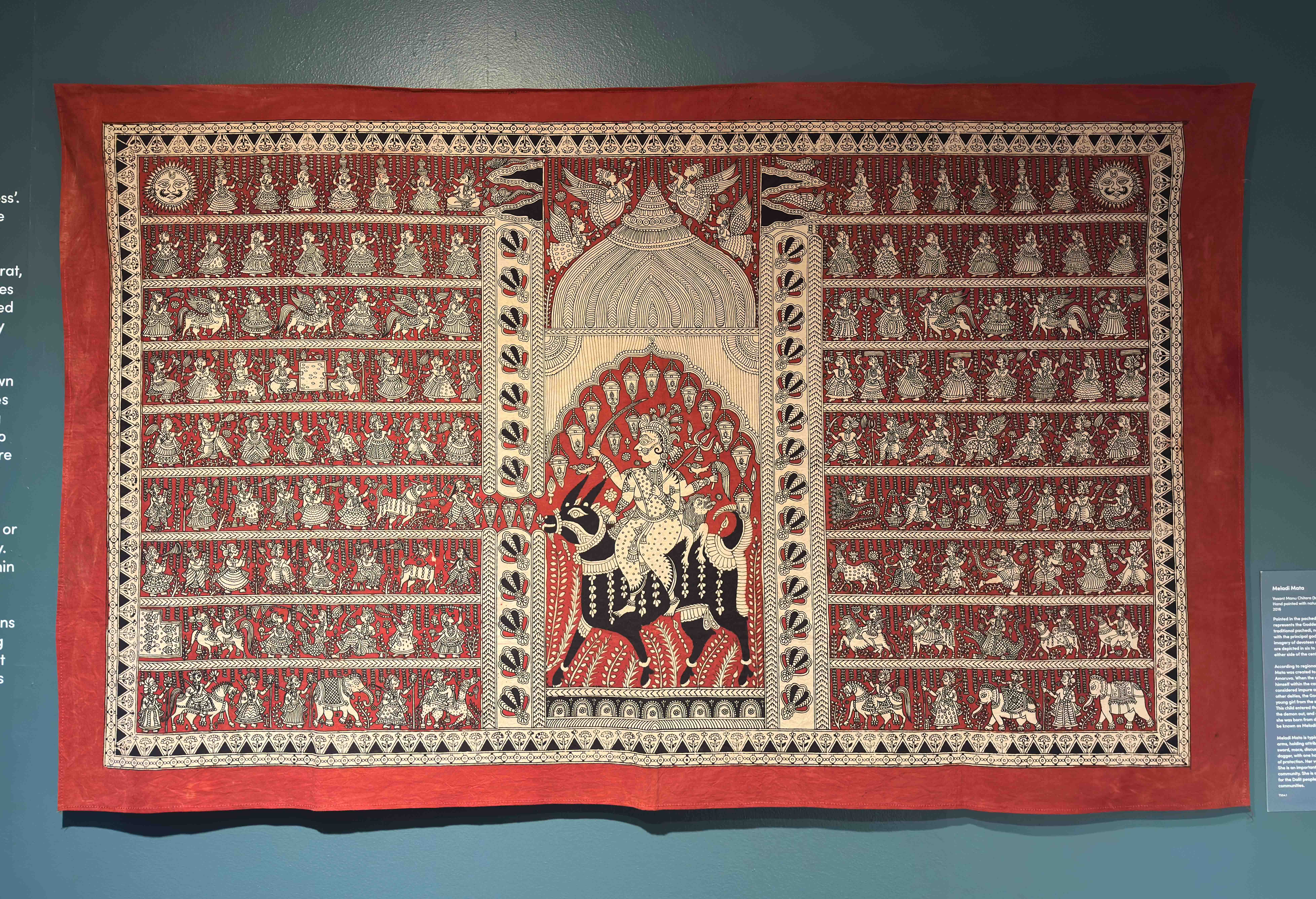
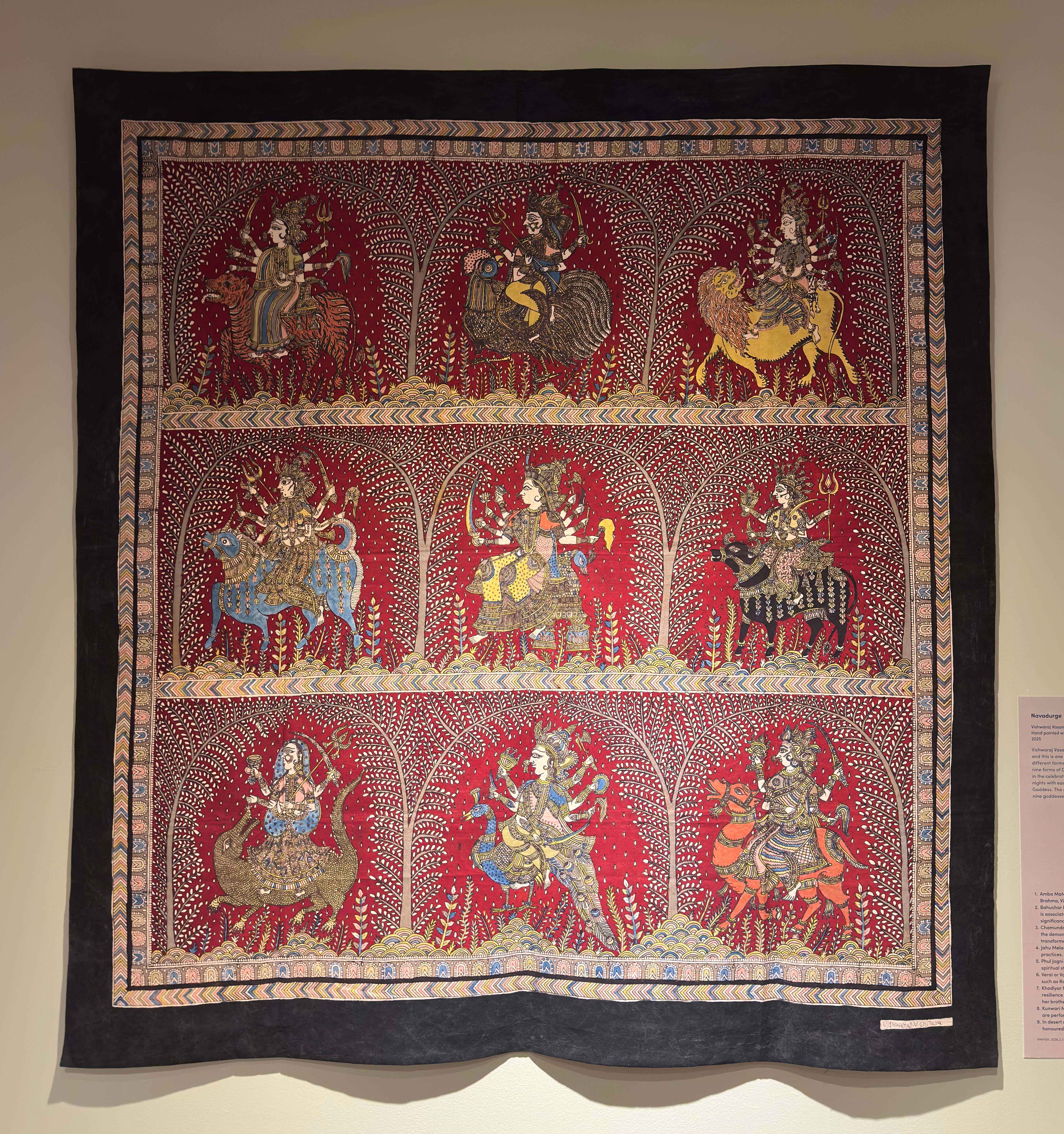
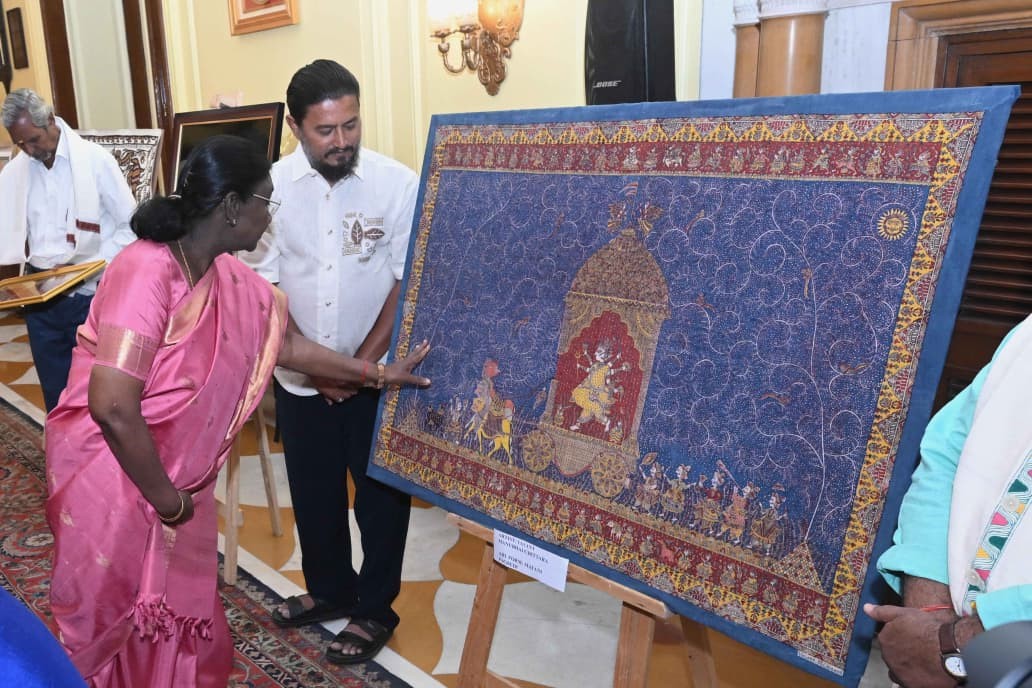
Primarily, a traveller group, the Vaghri people built their own semi-permanent settlements called vados and their shrines formed an extension to their houses. They started painting textiles called Mata ni Pachedi that were used as backdrops or canopies as part of their shrines. Traditionally, there were two main types of sacred textiles. Wall hangings acting as backdrops to shrines are called pachedi or lambo. These would have the goddess depicted in the centre within a shrine or a temple and seated on a vahana (animal mount or vehicle). The second type is a chandarvo, used as a canopy. It has a square format in which the goddess is painted within a central circle.
Mata ni pachedi textiles are rich in narratives with depictions of stories of goddesses who overcame adversity, and illustrating how divine intervention could resolve even the most difficult challenges. These stories consistently depicted the goddess as an ally to socially excluded and vulnerable people.
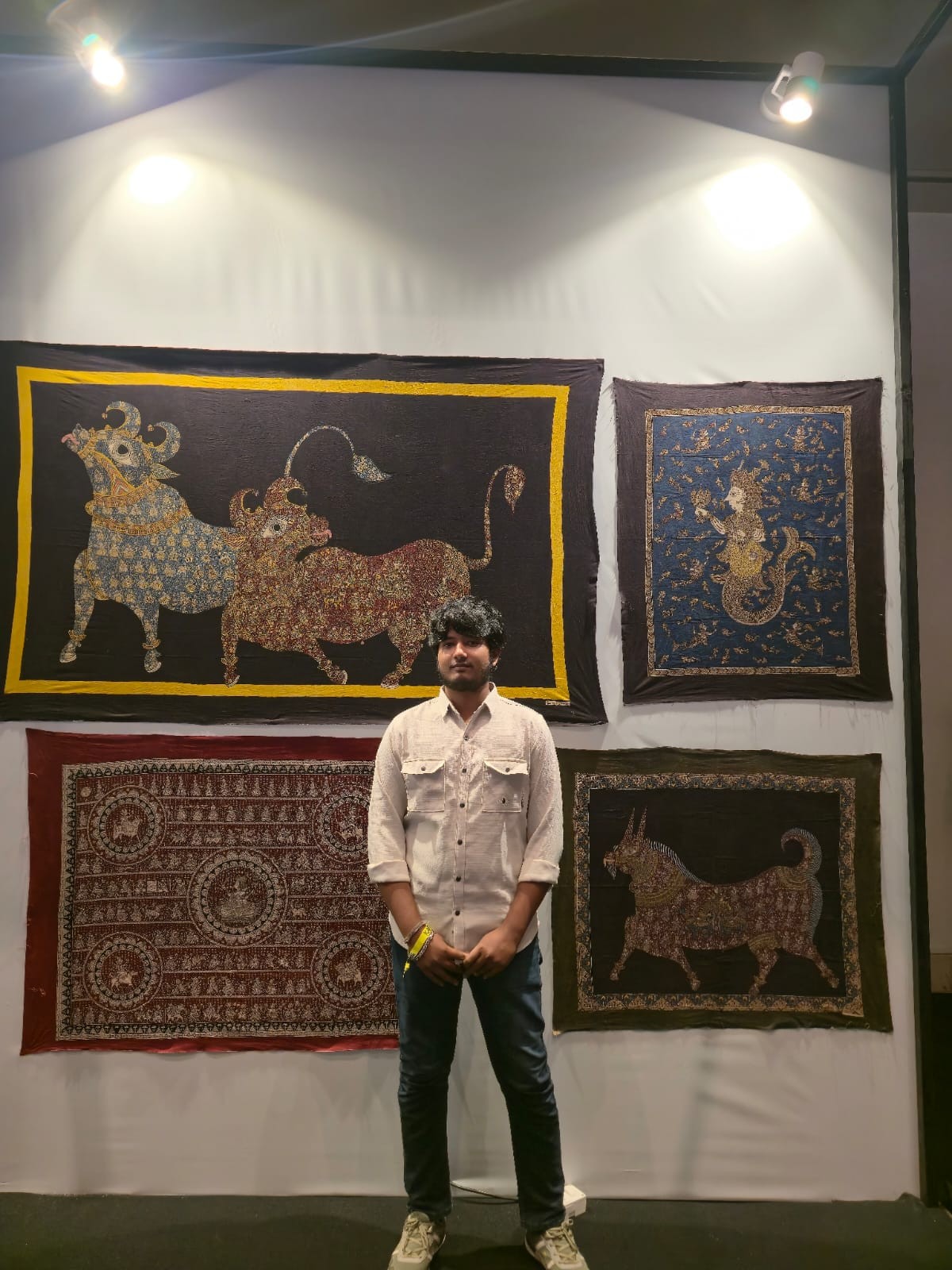
The exhibition showcases a diverse range of such textiles with a focus on symbolism, process, and people who make them.
The principal goddess in a pachedi can take on many avatars (incarnations) and their legends are rooted in the worship practices of the Devi or Shakti cult. Whilst in popular Hindu worship, the main goddesses are Lakshmi, Saraswati and Kali, the Vaghri community have their counterparts in the form of Ambika, Bahuchar and Kalki. Oral narratives suggest that there are around 99 different forms of the Goddess who are worshipped and represented in this artistic practice. The goddesses depicted in Mata ni Pachedi textiles are central to the spiritual life of the Vaghri community. They also offer a glimpse into the agricultural and pastoral lifestyle of the community as well as the regional history of maritime trade in Gujarat. Each of these goddesses are distinctly identified by the vahana they ride on.
Among the most important is Vishat Mata, regarded as the ancestral deity of the Vaghris. Vahanvati Mata is revered by seafarers and traders, while Momai Mata, also known as Dashamaa, is a major goddess of the Kutch region, associated with the protection of health, livestock, and harvests. Khodiyar Mata is believed to have the power to foretell the nature of the monsoon.
In addition to these, the Vaghri people worship protective goddesses like Meladi Mata linked to disease and epidemic control. Shitala Mata is widely honoured as a protector against smallpox, and Hadaksha Mata is invoked for protection from rabies.
Process and Techniques
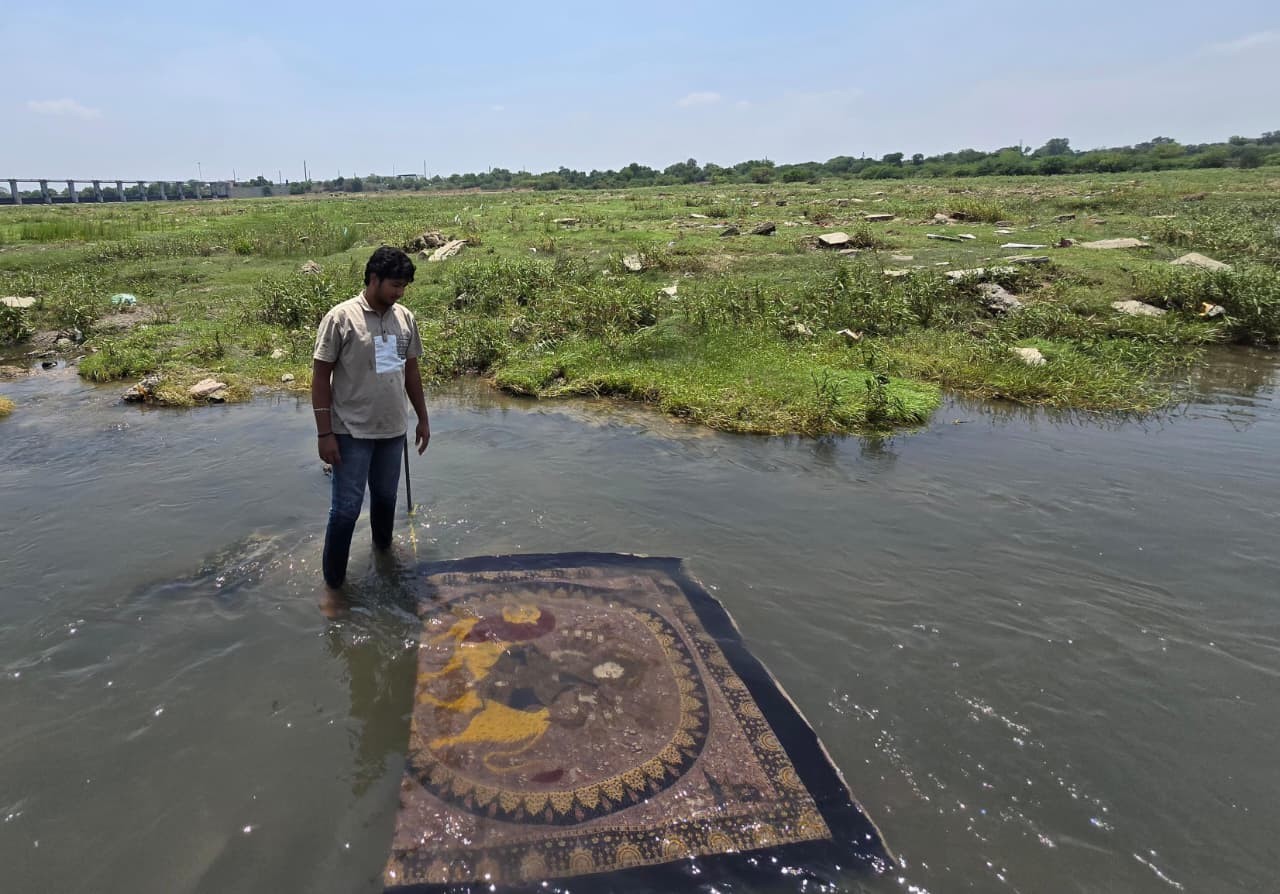
Mata ni Pachedi textiles are made using the kalamkari technique. The term “Kalamkari,” means “drawing with a pen,” and refers to the bamboo nib used to produce fine, hand-drawn outlines. The technique is used to produce other textile crafts, particularly in Andhra Pradesh, but Mata ni Pachedi is distinct with its devotional significance.
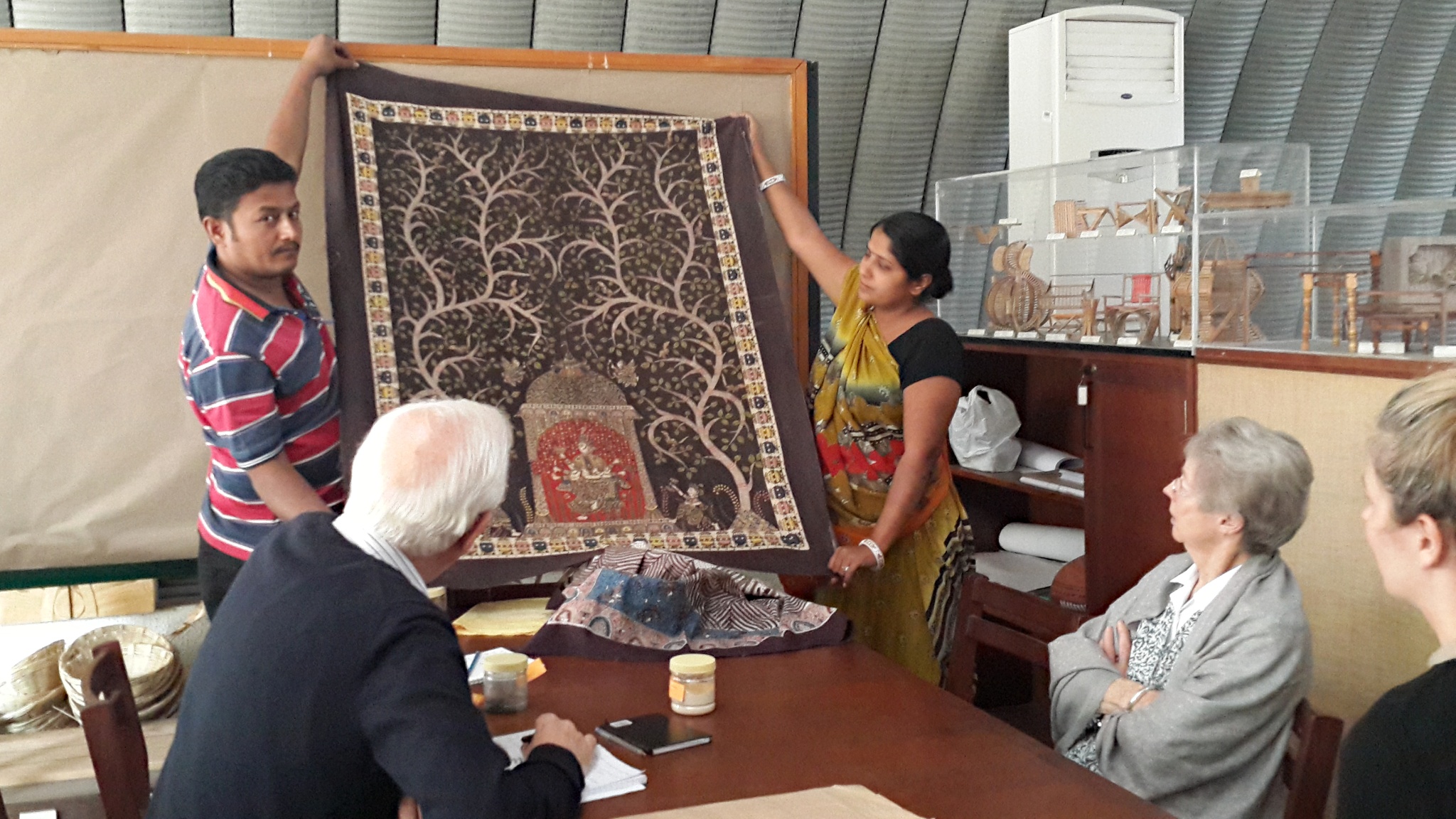
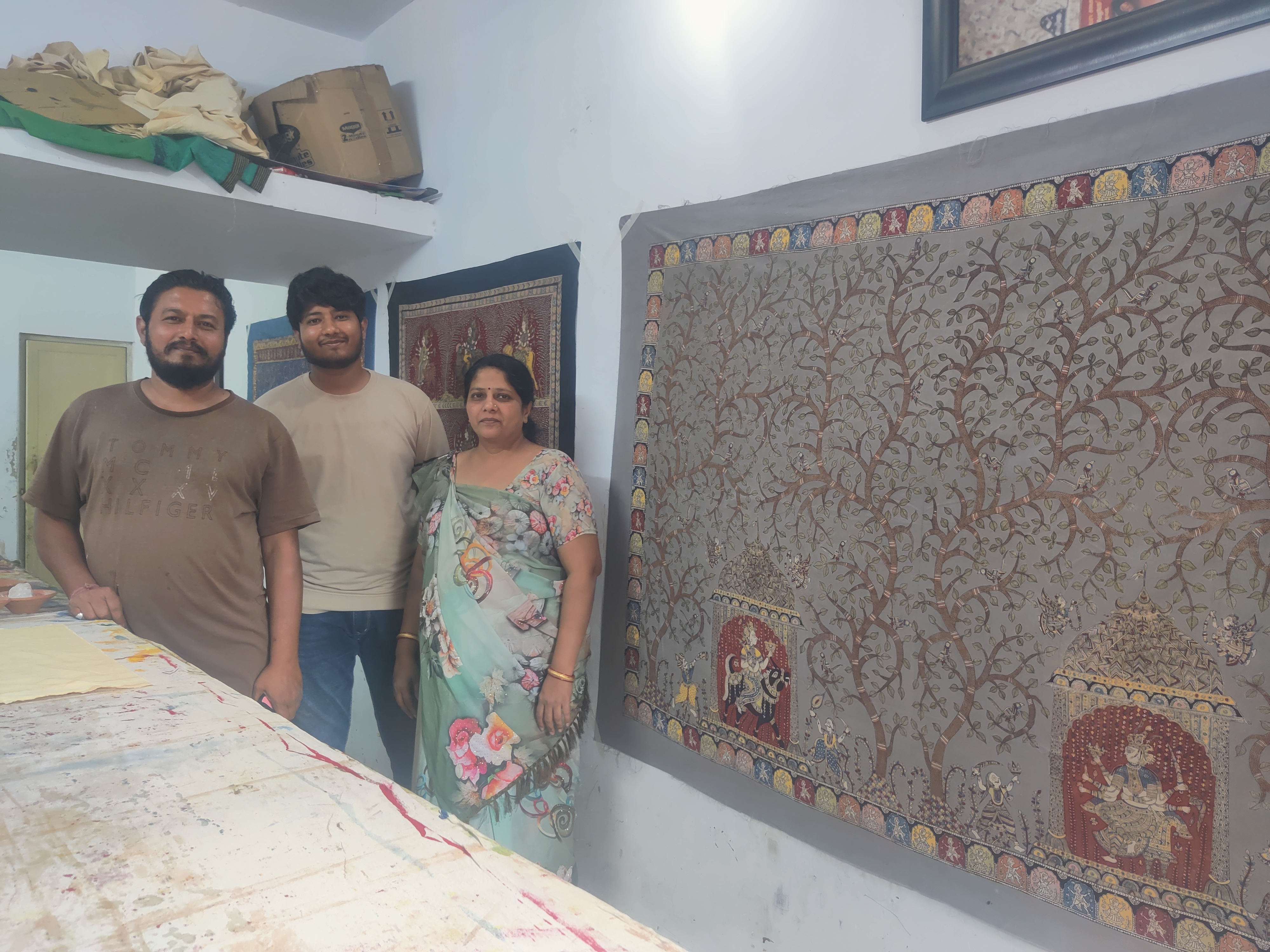
Vasant Manu Chitara, Anita Vasant Chitara and their sons Sohan Vasant Chitara and Vishwaraj Vasant Chitara live in Ahmedabad, Gujarat, India. They are a ninth-generation family and among the few remaining families in Ahmedabad practising the art form. The knowledge of the art form along with the oral histories associated with the narratives are passed on from generation to generation. Vasant Manu Chitara learnt the art form from his father, Manu Chitara, and is now passing on the knowledge to both his sons.
The purpose of the art form has grown from being primarily devotional to having more room for creative interpretation. The range of products include decorative wall hangings, clothing, like sarees and dupattas, and souvenir objects. However, artists like Vasant Manu Chitara and his family continue to retain some of the traditional aspects of this art form such as the motifs and depictions of the Goddess and the use of natural dyes and pigments.